
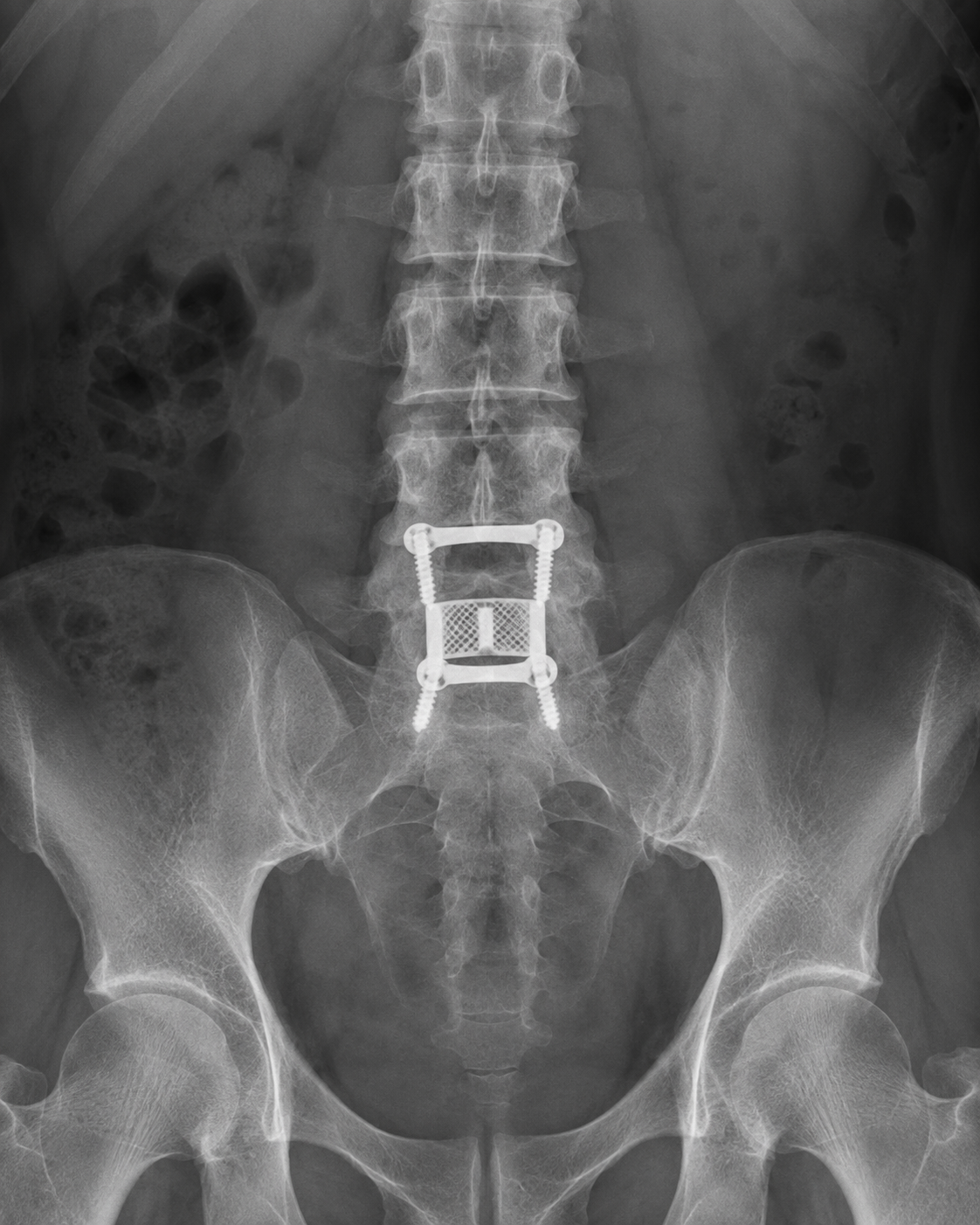
Anterior Lumbar Interbody Fusion (ALIF) Surgery in Los Angeles
Orthopedic Spine Surgeon — Long Beach & Torrance, CA
Medically reviewed by Brandon A. Ortega, MD · Last updated July 30, 2026
Anterior lumbar interbody fusion is a minimally invasive spinal stabilization procedure performed through the abdomen. The damaged disc is removed and replaced with a bone-filled spacer that restores disc height and supports fusion between the vertebrae. Patients typically begin walking shortly after surgery and gradually resume routine activities over several weeks. High-impact activities may remain restricted for three to six months, while the fusion can continue developing for up to a year. Reduced pain, improved function, stable alignment, and progressive bone growth on imaging are common indicators of success.
What Is an Anterior Lumbar Interbody Fusion?
Anterior lumbar interbody fusion, abbreviated ALIF, joins two or more vertebrae in the lower back. “Anterior” means the surgeon reaches the spine from the front of the body through an abdominal incision.
During the procedure, the damaged disc is removed and replaced with an interbody cage or spacer containing bone-graft material. The implant restores space between the vertebrae and provides a structure through which new bone can grow.
Screws may be placed through the cage, and additional screws and rods may sometimes be inserted from the back for greater stability. ALIF is considered minimally invasive because it follows natural tissue planes and avoids cutting through the large muscles along the back of the spine.
Conditions Treated
ALIF may be used to treat lower-spine conditions involving disc collapse, instability, deformity, or painful abnormal movement, including:
- Lumbar degenerative disc disease
- Spondylolisthesis
- Lumbar spondylosis
- Degenerative scoliosis
- Loss of disc height
- Lumbar spinal instability
- Recurrent disc degeneration following previous surgery
- Nerve compression associated with disc collapse or deformity
The procedure is particularly useful when restoring disc height may improve alignment or create additional space around compressed nerves. It is most commonly performed at the lower lumbar levels, especially L4-L5 and L5-S1.
Surgery Candidates and General Patient Criteria
Potential candidates may have persistent lower-back or leg symptoms that correspond with a damaged or unstable lumbar disc and have not improved sufficiently with nonsurgical treatment.
Conservative care may include physical therapy, medication, activity modification, spinal injections, or other appropriate treatments.
General candidacy considerations include:
- Disc collapse or instability confirmed by imaging
- Symptoms that correspond with the affected spinal level
- Adequate bone quality to support the implant
- General health suitable for anesthesia and abdominal surgery
- Realistic expectations about spinal fusion and recovery
- Ability to follow postoperative restrictions
- No active infection
- Suitable abdominal and vascular anatomy
Previous abdominal surgery, vascular disease, osteoporosis, nicotine use, diabetes, obesity, and the number of levels requiring treatment may affect surgical planning and risk.
ALIF may not be the best approach for every lumbar level. Upper lumbar discs can be more difficult to access from the front because of nearby anatomy, and another fusion approach may be more appropriate.
What to Expect
Before Surgery
Before ALIF, the surgical team reviews the patient’s symptoms, medical history, imaging, medications, and previous treatments.
Preparation may include:
- Physical and neurological examination
- X-rays, MRI, or CT imaging
- Blood tests and medical clearance
- Bone-density assessment
- Medication and supplement review
- Instructions regarding blood thinners
- Nicotine cessation
- Fasting before anesthesia
- Arranging transportation and help at home
Because the procedure requires access through the abdomen, an access or vascular surgeon may participate alongside the spine surgeon. Patients should disclose previous abdominal operations, vascular conditions, blood-clotting problems, and all medications.
During Surgery
ALIF is performed under general anesthesia. An incision is made in the abdomen, and the abdominal contents are gently moved aside to reach the front of the lumbar spine.
Major blood vessels near the spine are carefully identified and protected. The spine surgeon then:
- Removes the damaged lumbar disc.
- Restores the height of the disc space.
- Places a cage or spacer containing bone graft between the vertebrae.
- Adds screws or other fixation when necessary.
- Confirms implant position and spinal alignment.
- Closes the incision.
Additional posterior screws and rods may be placed during the same operation when greater stability is required.
Recovery and Rehabilitation
Patients are commonly encouraged to stand and begin walking on the day of surgery or the following day. Hospitalization varies according to the number of levels treated, general health, pain control, and whether additional posterior surgery was performed.
Patients are generally advised to take it easy during the first two to four weeks. Recovery instructions may include:
- Taking short, frequent walks
- Keeping the incision clean and dry
- Avoiding heavy lifting
- Limiting deep bending and excessive twisting
- Taking medication as directed
- Remaining nicotine-free
- Attending follow-up visits and imaging
- Starting physical therapy when recommended
Many routine activities can resume gradually over several weeks. Running, weightlifting, contact sports, and other high-impact activities may remain restricted until the fusion is more mature, commonly around three to six months.
Bone growth continues more slowly than functional recovery. The graft may require up to a year to fully fuse with the adjacent vertebrae.
Potential Complications and Success Indicators
Potential complications include:
- Infection or bleeding
- Blood clots
- Reaction to anesthesia
- Injury to nearby blood vessels
- Bowel, bladder, or ureter injury
- Temporary bowel inactivity
- Incisional hernia
- Nerve injury or new leg symptoms
- Retrograde ejaculation and fertility complications in men
- Implant movement or settling
- Hardware failure
- Failure of the vertebrae to fuse
- Persistent or recurrent pain
- Need for additional surgery
Blood-vessel injury is an important ALIF-specific risk because major arteries and veins lie in front of the lumbar spine. The surgical team evaluates the patient’s anatomy and protects these structures during the approach.
Indicators of a successful outcome may include:
- Reduced lower-back or leg pain
- Improved standing and walking tolerance
- Restored disc height
- Improved or maintained spinal alignment
- Stable implants on follow-up imaging
- Progressive bone growth across the treated level
- Improved ability to perform daily activities
- Return to work or recreational activity
A technically successful fusion does not guarantee complete pain relief. Outcomes depend on the original diagnosis, correct identification of the pain source, bone quality, overall health, and adherence to recovery instructions.
Anterior Lumbar Interbody Fusion (ALIF) Surgery in Los Angeles Q&A
Is ALIF considered minimally invasive?
Yes. ALIF follows natural tissue planes through the abdomen and avoids disrupting the large muscles along the back of the spine. It remains a major operation involving disc removal, implantation, and spinal fusion.
Does ALIF always require screws in the back?
No. Some procedures use fixation built into the anterior cage. Posterior screws and rods may be added when additional stability is needed because of instability, deformity, bone quality, or the number of levels treated.
How long does an ALIF fusion take to heal?
Patients may resume many routine activities within several weeks, but the biological fusion develops over several months. High-impact activities may remain restricted for three to six months, and complete bone-graft incorporation can take up to one year.
Why Choose BAO Spine?
Fellowship-trained expertise
Advanced, subspecialty training in complex and minimally invasive spine surgery.
Conservative care first
Most patients improve without surgery — treatment begins with the least invasive options.
Motion-preserving techniques
Cervical and lumbar disc replacement that protects your natural range of motion.
Two convenient locations
Personalized spine care in both Long Beach and Torrance, California.

About Dr. Ortega
Brandon A. Ortega, MD, is a fellowship-trained orthopedic spine surgeon providing comprehensive, personalized spinal care to adults in Long Beach and Torrance, California. His dedication to helping each patient regain mobility, reduce pain, and improve their quality of life has earned the respect of everyone in the community struggling with neck and back pain.
Consultation
Get expert care with anterior lumbar interbody fusion (ALIF) surgery in Los Angeles
Request an appointment and Brandon A. Ortega, MD's team will reach out to schedule your visit — fellowship-trained, personalized spine care.
Prefer to call? Contact us.