
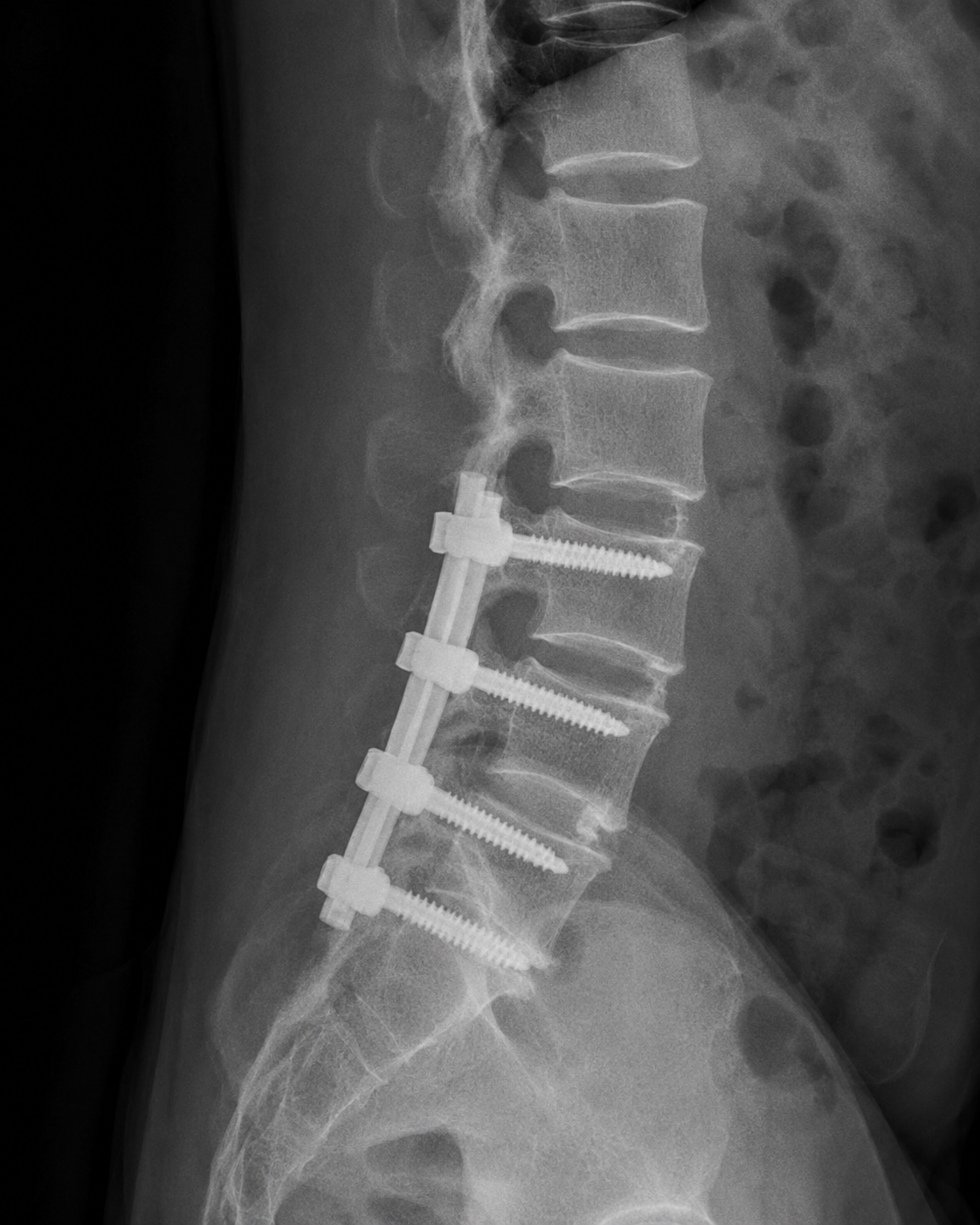
Spinal Fusion Surgery in Los Angeles
Orthopedic Spine Surgeon — Long Beach & Torrance, CA
Medically reviewed by Brandon A. Ortega, MD · Last updated July 30, 2026
Spinal fusion surgery permanently joins two or more vertebrae to stabilize the spine, correct abnormal alignment, or support the spine after decompression. Selected cervical, thoracic, and lumbar fusions may be performed using minimally invasive techniques that limit muscle disruption and blood loss. Light activity is usually resumed gradually over the first several weeks, but the bones commonly require several months to form a solid fusion. Reduced nerve-related pain, improved function, stable alignment, and progressive bone healing on follow-up imaging are common indicators of success.
What Is Spinal Fusion Surgery?
Spinal fusion is a surgical procedure that connects two or more vertebrae so they heal into one stable section of bone. Eliminating movement at the treated level may reduce pain caused by instability, prevent abnormal motion, or maintain spinal alignment after damaged tissue has been removed.
During the procedure, the surgeon places bone graft or a bone-like material between the vertebrae. Screws, rods, plates, cages, or other implants may be added to hold the spine in position while new bone develops across the treated level.
Bone-graft material may come from the patient, a donor bone bank, or a manufactured bone-graft substitute. The implanted hardware provides immediate structural support, while the biological fusion develops gradually over the following months.
Spinal fusion may be performed through the front, back, or side of the body. The most appropriate approach depends on the affected spinal region, the condition being treated, the number of levels involved, spinal alignment, and whether nerve decompression is also required.
Some fusion procedures can be completed through smaller incisions using tubular retractors, image guidance, navigation, or other minimally invasive techniques. However, complex deformity correction, extensive nerve compression, or multilevel instability may require a traditional open approach to provide sufficient access and visualization.
Types of Spinal Fusion Surgeries
Cervical Spinal Fusion
Cervical spinal fusion stabilizes two or more vertebrae in the neck. It may be performed through an anterior approach at the front of the neck or a posterior approach through the back.
Anterior cervical discectomy and fusion is a common cervical fusion procedure. The surgeon removes a damaged disc and any bone spurs compressing the spinal cord or nerves. A spacer containing bone-graft material is then inserted into the empty disc space, often with a plate and screws.
Posterior cervical fusion may be performed when stabilization is needed from the back of the neck, particularly after a laminectomy, for multilevel disease, or when the patient has significant instability or deformity.
Cervical fusion may be used to:
- Stabilize damaged cervical vertebrae
- Treat instability following decompression
- Correct or prevent abnormal alignment
- Address disc herniation or spinal stenosis with instability
- Support the spine after trauma or reconstruction
The goals are generally to relieve neurological compression, maintain or improve spinal stability, and preserve appropriate cervical alignment.
Thoracic Spinal Fusion
Thoracic spinal fusion stabilizes vertebrae in the middle portion of the spine. Because the thoracic spine is connected to the rib cage, surgical access and instrumentation differ from procedures performed in the neck or lower back.
Thoracic fusion may be considered for:
- Scoliosis or kyphosis
- Traumatic spinal fractures
- Thoracic instability
- Spinal tumors or infections
- Severe degeneration
- Spinal-cord compression requiring decompression
- Abnormal movement between thoracic vertebrae
The procedure may be performed through the back, side, or a combination of approaches. Screws and rods are commonly used to support the spine while the bone graft heals.
Selected thoracic fusions may be performed through minimally invasive portals or muscle-sparing incisions. More extensive deformities or injuries may require an open approach across several levels.
Lumbar Spinal Fusion
Lumbar spinal fusion joins vertebrae in the lower back. It is commonly used to treat instability, vertebral slippage, deformity, or painful movement associated with severe degeneration.
Common lumbar fusion approaches include:
- Anterior lumbar interbody fusion: The spine is reached through the abdomen.
- Posterior lumbar interbody fusion: The disc space is reached from the back.
- Transforaminal lumbar interbody fusion: The disc is approached from one side of the back.
- Lateral lumbar interbody fusion: The disc space is reached through the patient’s side.
- Posterolateral fusion: Bone graft is placed along the back and sides of the vertebrae.
An interbody fusion removes a damaged disc and inserts a cage or spacer between the vertebrae. Screws and rods may then be placed to support the segment.
Minimally invasive lumbar fusion may use small incisions, muscle dilation, specialized retractors, and imaging guidance. Procedures such as minimally invasive TLIF may be used for selected patients with spondylolisthesis, degenerative disc disease, recurrent disc herniation, or associated nerve symptoms.
Conditions Treated
Conditions Treated
Spinal fusion may be used to treat conditions that cause structural instability, deformity, painful abnormal movement, or neurological compression, including:
- Spinal instability
- Spondylolisthesis
- Scoliosis
- Kyphosis
- Degenerative disc disease
- Cervical or lumbar spinal stenosis
- Recurrent disc herniation
- Severe facet-joint degeneration
- Spinal fractures
- Vertebral deformity
- Spinal tumors or infections
- Failed previous spinal surgery
- Instability following laminectomy or another decompression
- Nerve-root or spinal-cord compression associated with instability
Fusion may also be performed after a damaged disc, vertebral body, or other structure has been removed. In these cases, fusion restores support and prevents excessive movement at the reconstructed level.
Spinal fusion is not appropriate for every type of neck or back pain. Results are less predictable when no specific source of pain, deformity, instability, or compression can be identified.
Surgery Candidates and General Patient Criteria
Many patients begin with nonsurgical treatment before spinal fusion is considered. Conservative care may include medication, activity modification, physical therapy, spinal injections, or bracing.
Potential candidates may have:
- Symptoms that have not improved with appropriate conservative care
- Confirmed spinal instability or abnormal movement
- Spondylolisthesis or another structural deformity
- Nerve or spinal-cord compression requiring decompression and stabilization
- Progressive neurological symptoms
- Pain or weakness that significantly limits daily activity
- Imaging findings that correspond with their symptoms
- Adequate bone quality to support the implants and fusion
- General health suitable for surgery and anesthesia
- A realistic understanding of the recovery process
Surgery may be recommended more urgently when there is worsening weakness, loss of coordination, severe spinal-cord compression, an unstable fracture, or another condition that threatens neurological function or spinal stability.
Bone quality is an important consideration because the vertebrae must securely support the hardware while the graft heals. Osteoporosis or other conditions that weaken bone may increase the risk of implant loosening, vertebral fracture, or failure of the fusion.
Nicotine use can interfere with bone and wound healing. Patients may be required to stop smoking, vaping, or using other nicotine products before surgery and throughout the healing period. Diabetes and certain other medical conditions may also increase the risk of nonunion.
A surgical evaluation may include physical and neurological examinations, X-rays, MRI, CT imaging, bone-density testing, and dynamic X-rays that evaluate movement between vertebrae.
What to Expect
Before Surgery
Before spinal fusion, the surgical team reviews the patient’s diagnosis, symptoms, medical history, previous treatment, medications, allergies, and imaging.
Preparation may include:
- Blood tests and other preoperative testing
- MRI, CT, or updated X-rays
- Bone-density assessment
- Medical or cardiac clearance when required
- Review of prescription medication and supplements
- Instructions concerning blood-thinning medications
- Nicotine cessation
- Fasting before anesthesia
- Skin preparation
- Arranging transportation and assistance at home
Patients should tell the surgical team about all medications, supplements, allergies, previous reactions to anesthesia, infections, bleeding conditions, and nicotine use. Medications should not be stopped unless directed by the treating clinician.
The surgeon will explain the proposed approach, number of levels being fused, type of graft, planned implants, expected hospitalization, recovery restrictions, and alternatives to fusion.
During Surgery
Spinal fusion is generally performed under general anesthesia. The exact procedure varies by spinal region and surgical approach.
In general, the surgeon:
- Positions the patient according to the planned approach.
- Makes an incision through the front, side, or back of the body.
- Confirms the correct spinal level with imaging.
- Removes damaged disc, bone, ligament, or other compressive tissue when necessary.
- Prepares the surfaces intended for fusion.
- Places bone-graft material between or alongside the vertebrae.
- Inserts a cage, spacer, screws, rods, plates, or other instrumentation when indicated.
- Confirms spinal alignment and implant placement.
- Closes the incision and applies a dressing.
Minimally invasive procedures may use muscle dilators and tubular retractors rather than extensively separating the muscles from the spine. Navigation or real-time imaging may assist with the placement of screws and other implants.
The duration of surgery and hospital stay depend on the spinal region, number of levels, surgical approach, and complexity of the reconstruction. Mayo Clinic notes that a hospital stay of approximately two to three days is typical after spinal fusion, although some limited procedures may require less time and complex surgeries may require longer hospitalization.
Recovery and Rehabilitation
Patients are usually encouraged to begin standing and walking soon after surgery with assistance. Early activity supports circulation and gradually restores mobility, but the spine must be protected while the fusion develops.
Initial recovery instructions may include:
- Taking short, frequent walks
- Keeping the incision clean and dry
- Taking medication as directed
- Avoiding lifting, bending, and twisting
- Using a brace when prescribed
- Avoiding high-impact or strenuous exercise
- Remaining nicotine-free
- Attending postoperative visits and imaging
- Gradually increasing activity under medical guidance
Return-to-work timing depends on the procedure and the physical demands of the patient’s job. Patients with sedentary work may return sooner than those whose occupations require lifting, climbing, repetitive movement, or prolonged driving.
Physical therapy may be recommended to improve walking, posture, strength, balance, and safe movement mechanics. Therapy is introduced according to the stage of healing and should not place excessive stress on the developing fusion.
Pain or nerve-related symptoms may improve soon after surgery or resolve gradually. Numbness, tingling, and weakness often take longer to recover and may not resolve completely when a nerve or the spinal cord was compressed for an extended period.
The vertebrae commonly require several months to heal into a solid fusion. Broader recovery following neck or back surgery may take approximately three months to a year, depending on the operation, the patient’s health, the number of levels treated, and the definition of complete recovery.
Potential Complications and Success Indicators
Potential complications of spinal fusion include:
- Infection
- Poor wound healing
- Bleeding
- Blood clots
- Reaction to anesthesia
- Injury to a nerve, the spinal cord, or nearby blood vessels
- Dural tear and leakage of spinal fluid
- Persistent or recurrent symptoms
- Pain at a bone-graft donor site
- Failure to form a solid fusion
- Hardware loosening, movement, or breakage
- Cage or implant subsidence
- Loss of spinal alignment
- Vertebral fracture
- Reduced motion at the fused level
- Degeneration of nearby spinal levels
- Need for revision surgery
Failure of the bones to heal together is called nonunion or pseudarthrosis. Risk factors may include nicotine use, diabetes, poor bone quality, inadequate nutrition, extensive multilevel fusion, or excessive stress on the spine during recovery.
Successful recovery may be indicated by:
- Reduced radiating arm or leg pain
- Improved neck or back stability
- Improved strength or sensation
- Better balance, walking, or coordination
- Correction or maintenance of spinal alignment
- Increased ability to perform daily activities
- Stable hardware on follow-up imaging
- Progressive bone growth across the fused level
- Return to work, exercise, or recreational activities
- Reduced dependence on pain medication
Fusion is generally more predictable when used to correct instability, deformity, fracture, or another clearly identified structural problem. It may be less reliable for generalized neck or back pain without a confirmed source. Spinal fusion also does not prevent arthritis or future degeneration elsewhere in the spine.
Patients should contact their surgical team for fever, increasing wound redness or drainage, uncontrolled pain, new or worsening weakness, loss of sensation, difficulty breathing, chest pain, or new bladder or bowel dysfunction.
Spinal Fusion Surgery in Los Angeles Q&A
Is spinal fusion surgery minimally invasive?
Spinal fusion may be performed using minimally invasive techniques in selected patients. These procedures use smaller incisions, muscle dilation, specialized retractors, and image-guided hardware placement. However, not every condition can be safely or effectively treated through a minimally invasive approach. Complex deformities, multilevel disease, and extensive reconstruction may require open surgery.
Does spinal fusion eliminate all movement in the spine?
No. Fusion eliminates movement only between the vertebrae included in the fusion. The remaining spinal levels continue to move. The amount of noticeable motion loss depends on the location and number of levels fused. Longer fusions generally affect flexibility more than single-level procedures.
How can a surgeon tell whether the fusion has healed?
The surgeon evaluates healing through physical examination and follow-up imaging, such as X-rays or CT scans. Indicators may include new bone forming across the treated level, stable implants, maintained alignment, and no abnormal movement between the fused vertebrae.
Why Choose BAO Spine?
Fellowship-trained expertise
Advanced, subspecialty training in complex and minimally invasive spine surgery.
Conservative care first
Most patients improve without surgery — treatment begins with the least invasive options.
Motion-preserving techniques
Cervical and lumbar disc replacement that protects your natural range of motion.
Two convenient locations
Personalized spine care in both Long Beach and Torrance, California.

About Dr. Ortega
Brandon A. Ortega, MD, is a fellowship-trained orthopedic spine surgeon providing comprehensive, personalized spinal care to adults in Long Beach and Torrance, California. His dedication to helping each patient regain mobility, reduce pain, and improve their quality of life has earned the respect of everyone in the community struggling with neck and back pain.
Consultation
Get expert care with spinal fusion surgery in Los Angeles
Request an appointment and Brandon A. Ortega, MD's team will reach out to schedule your visit — fellowship-trained, personalized spine care.
Prefer to call? Contact us.