
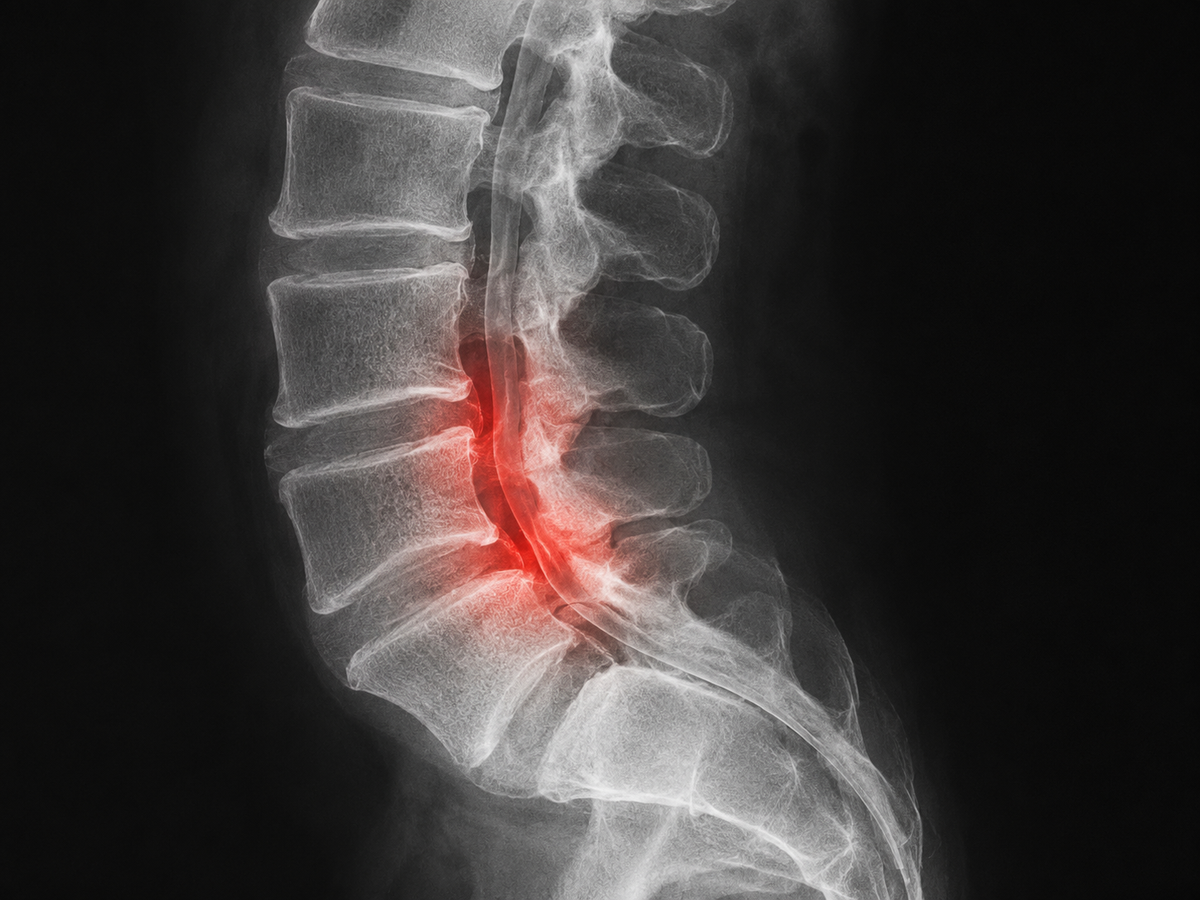
Spinal Stenosis Treatment in Los Angeles
Orthopedic Spine Surgeon — Long Beach & Torrance, CA
Medically reviewed by Brandon A. Ortega, MD · Last updated July 31, 2026
Spinal stenosis treatment focuses on relieving pressure on the spinal cord or nerve roots caused by narrowing within the spine. Symptoms may include neck or back discomfort, radiating arm or leg pain, numbness, weakness, reduced walking tolerance, and balance problems. Many patients begin with physical therapy, medication, exercises, or injections, while progressive neurological symptoms or severe functional limitations may require surgical decompression.
What Is Spinal Stenosis?
Spinal stenosis occurs when spaces within the spinal column become too narrow. This narrowing can place pressure on the spinal cord or the nerve roots that travel through and exit the spine.
Some people have visible narrowing without significant symptoms. Symptoms are more likely when the available space becomes limited enough to irritate or compress neurological structures.
Narrowing of the Spinal Canal
The spinal canal is the central passage formed by the vertebrae. It contains the spinal cord in the cervical and thoracic regions and nerve roots in the lower lumbar spine.
The canal may narrow because of:
- Bone spurs associated with arthritis
- Thickened spinal ligaments
- Bulging or herniated discs
- Enlargement of the facet joints
- Vertebral slippage
- Spinal fractures or deformity
- Naturally narrow spinal anatomy
Age-related wear is a common cause, although narrowing may also develop because of congenital anatomy, injury, previous surgery, or another spinal condition.
Lumbar vs. Cervical Spinal Stenosis
Lumbar spinal stenosis affects the lower back. It commonly compresses the nerve roots that supply the legs, producing leg pain, numbness, weakness, or cramping during standing and walking.
Cervical spinal stenosis affects the neck. It may compress individual nerve roots, causing arm symptoms, or compress the spinal cord, producing cervical myelopathy. Spinal cord compression can affect the hands, balance, coordination, and walking—not only the neck and arms.
Thoracic stenosis can also occur in the middle back but is less common. Because the spinal cord passes through this region, symptomatic thoracic narrowing requires careful neurological evaluation.
Central vs. Foraminal Stenosis
Central spinal stenosis narrows the main spinal canal. In the cervical or thoracic spine, central narrowing may place pressure on the spinal cord. In the lumbar spine, it may compress multiple nerve roots.
Foraminal stenosis narrows one or more foramina—the openings through which spinal nerves exit. This may cause radiating pain, numbness, tingling, or weakness along the affected nerve.
A patient may have central stenosis, foraminal stenosis, or both. The location and severity of narrowing help determine the symptom pattern and appropriate treatment.
Spinal Stenosis Symptoms
Spinal stenosis symptoms vary according to the region involved, the degree of compression, and whether the spinal cord or individual nerve roots are affected. Symptoms may develop gradually and fluctuate with posture or activity.
Lumbar Symptoms
Lumbar spinal stenosis may cause:
- Pain in the buttocks, thighs, calves, or feet
- Leg numbness or tingling
- Leg heaviness or weakness
- Cramping while standing or walking
- Reduced walking distance
- Lower-back discomfort
- Symptoms affecting one or both legs
A characteristic symptom is neurogenic claudication. This refers to leg pain, weakness, heaviness, or cramping that develops while standing or walking and often improves when sitting or leaning forward. Bending forward can temporarily increase the available space around the lumbar nerves.
Cervical Symptoms
Cervical spinal stenosis may produce nerve-root symptoms such as:
- Neck or shoulder pain
- Pain traveling into an arm
- Numbness or tingling in the hand or fingers
- Arm or hand weakness
- Reduced grip strength
When the spinal cord is compressed, symptoms may also include:
- Hand clumsiness
- Difficulty with buttons, handwriting, or small objects
- Balance problems
- An unsteady or stiff walking pattern
- Leg weakness or heaviness
- Loss of coordination
Spinal-cord symptoms may be present even when neck pain is mild. Progressive balance, walking, or hand-function changes should be evaluated promptly.
How Symptoms Progress Over Time
Spinal stenosis often develops gradually as degenerative changes accumulate. Symptoms may remain stable, improve temporarily, or worsen over time.
Lumbar symptoms may initially appear only after prolonged walking and later begin after shorter distances. Cervical spinal-cord compression may progress from mild tingling or hand clumsiness to increasing weakness, balance difficulty, and loss of function.
The amount of narrowing visible on imaging does not always predict symptom severity. Treatment decisions should consider the examination, functional changes, and whether neurological symptoms are progressing.
Severe or Advanced Symptoms and When to Seek Care
Seek prompt medical assessment for:
- New or worsening arm or leg weakness
- Foot drop
- Increasing hand clumsiness
- Progressive balance or walking problems
- Frequent falls
- Symptoms affecting both arms or both legs
- Loss of coordination
Seek emergency care for:
- New loss of bladder or bowel control
- Difficulty starting or controlling urination
- Numbness around the groin, inner thighs, or buttocks
- Rapidly worsening weakness
- Sudden inability to stand or walk normally
These findings may indicate severe spinal-cord compression or cauda equina syndrome and should not be managed through routine home care alone.
Spinal Stenosis Treatments
Treatment depends on the location and severity of stenosis, the patient’s neurological findings, functional limitations, overall health, and response to previous care.
Nonsurgical treatment may reduce pain and improve mobility, but it does not physically enlarge a narrowed spinal canal. Surgery is considered when decompression is expected to provide greater benefit than continued conservative care.
Non-Surgical Treatment
Conservative treatment may include:
- Physical therapy
- Clinician-directed exercises
- Anti-inflammatory or pain medication when appropriate
- Activity modification
- Posture and movement guidance
- Heat or cold therapy
- Epidural steroid injections
- Selective nerve-root injections
- Walking aids when needed for safety
Physical therapy may focus on flexibility, core or neck strength, posture, balance, and movements that improve function without significantly aggravating symptoms.
Epidural injections may temporarily reduce inflammation and radiating nerve pain. Their benefit varies, and injections do not reverse the underlying narrowing. Mayo Clinic notes that steroid injections may provide limited benefit for some patients with spinal stenosis, so their role should be considered individually.
Surgical Treatment
Surgery may be considered when:
- Symptoms remain disabling despite appropriate nonsurgical care
- Walking or standing tolerance continues to decline
- Weakness, balance problems, or hand dysfunction progresses
- Imaging confirms compression that corresponds with the symptoms
- Spinal-cord compression threatens neurological function
- Bladder or bowel symptoms require urgent decompression
Potential procedures include:
- Laminotomy: Removes a limited portion of the lamina to create more space.
- Laminectomy: Removes a larger portion of the lamina to decompress the spinal canal.
- Foraminotomy: Enlarges the opening through which a spinal nerve exits.
- Discectomy: Removes disc material contributing to nerve compression.
- Spinal fusion: Stabilizes the spine when stenosis is accompanied by instability, deformity, vertebral slippage, or when decompression would create instability.
Selected decompression procedures may be performed using minimally invasive techniques. Fusion is not automatically required for every case of spinal stenosis and is generally added when stabilization is necessary.
Spinal Stenosis Treatment in Los Angeles Q&A
What Are the Most Common Symptoms of Spinal Stenosis?
Lumbar stenosis commonly causes leg pain, numbness, weakness, heaviness, or cramping during standing and walking. Cervical stenosis may cause arm or hand symptoms, reduced dexterity, balance problems, leg stiffness, and difficulty walking.
The symptoms depend on whether the narrowing affects individual nerve roots or the spinal cord.
What Causes Spinal Stenosis?
The most common causes involve age-related changes such as arthritis, bone spurs, disc degeneration, thickened ligaments, and enlarged spinal joints.
Other causes may include spondylolisthesis, spinal deformity, fracture, naturally narrow anatomy, or changes following previous surgery.
Can Spinal Stenosis Be Treated Without Surgery?
Yes. Many patients manage mild or moderate symptoms through physical therapy, medication, exercise, activity changes, or injections.
Nonsurgical care may improve pain and function but does not remove the anatomical narrowing. Surgery becomes more likely when symptoms remain severe, neurological function worsens, or daily mobility becomes substantially limited.
When Is Surgery Necessary for Spinal Stenosis?
Surgery may be recommended when appropriate nonsurgical treatment has not provided adequate relief, walking or daily function is significantly limited, or neurological symptoms such as weakness, balance loss, or hand dysfunction are progressing.
Urgent surgery may be necessary when severe compression causes bladder or bowel dysfunction, saddle numbness, or rapidly worsening weakness.
What Is a Laminectomy or Spinal Decompression?
A laminectomy removes part or all of the lamina, which forms the back of the spinal canal. Removing this bone—and sometimes nearby thickened ligament or bone spurs—creates more room around compressed nerves or the spinal cord.
Spinal decompression is a broader term that may include laminectomy, laminotomy, foraminotomy, or removal of other tissue contributing to compression.
Why Choose BAO Spine?
Fellowship-trained expertise
Advanced, subspecialty training in complex and minimally invasive spine surgery.
Conservative care first
Most patients improve without surgery — treatment begins with the least invasive options.
Motion-preserving techniques
Cervical and lumbar disc replacement that protects your natural range of motion.
Two convenient locations
Personalized spine care in both Long Beach and Torrance, California.

About Dr. Ortega
Brandon A. Ortega, MD, is a fellowship-trained orthopedic spine surgeon providing comprehensive, personalized spinal care to adults in Long Beach and Torrance, California. His dedication to helping each patient regain mobility, reduce pain, and improve their quality of life has earned the respect of everyone in the community struggling with neck and back pain.
Consultation
Get expert care for spinal stenosis treatment in Los Angeles
Request an appointment and Brandon A. Ortega, MD's team will reach out to schedule your visit — fellowship-trained, personalized spine care.
Prefer to call? Contact us.