
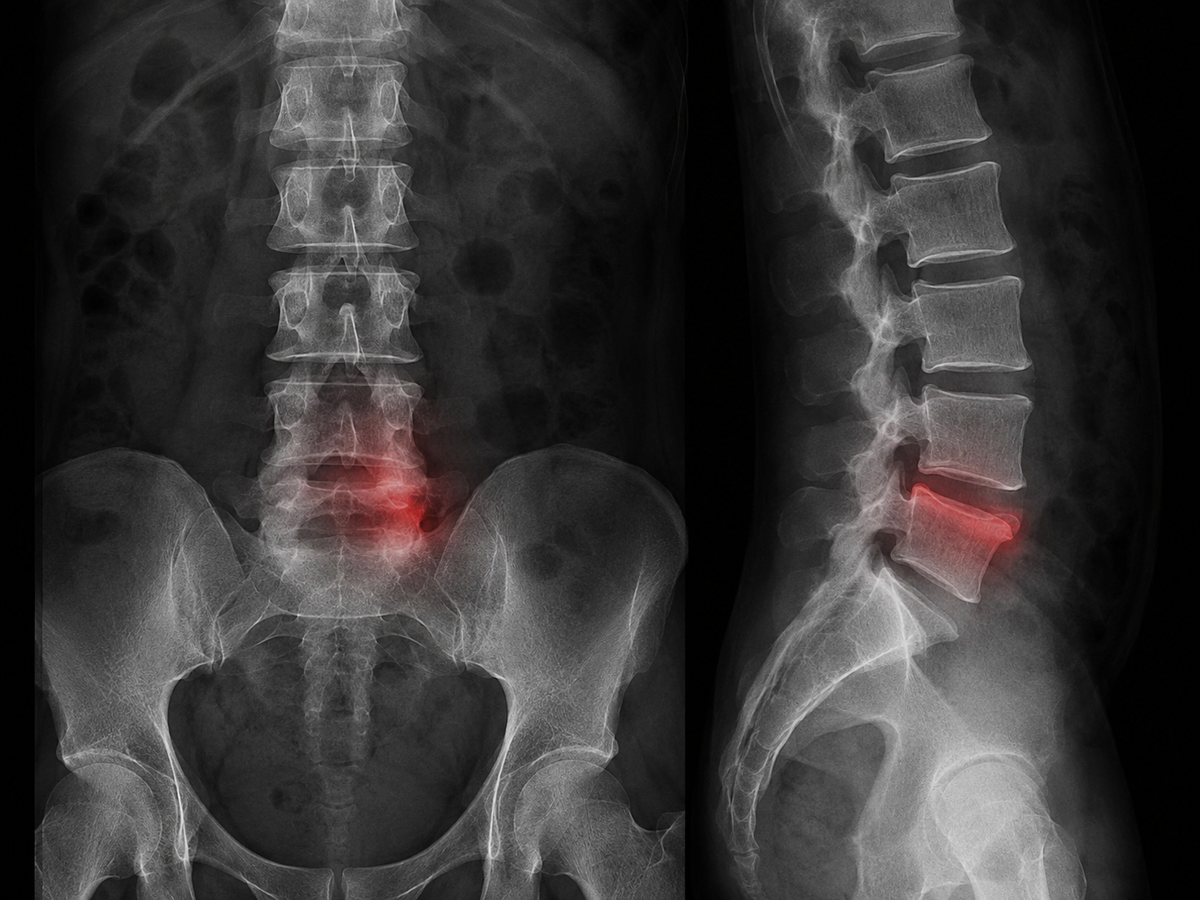
Lumbar Disc Herniation Treatment in Los Angeles
Orthopedic Spine Surgeon — Long Beach & Torrance, CA
Medically reviewed by Brandon A. Ortega, MD · Last updated July 31, 2026
Lumbar disc herniation treatment focuses on relieving lower-back pain and symptoms caused by pressure on a spinal nerve, including sciatica, numbness, tingling, and leg weakness. Most patients improve without surgery through activity modification, physical therapy, medication, or injections. When symptoms remain severe or neurological function worsens, minimally invasive decompression or microdiscectomy may be considered.
What Is a Lumbar Disc Herniation?
A lumbar disc herniation occurs when material from inside a spinal disc pushes through a weakened or torn portion of its outer layer. The displaced material may irritate or compress a nearby nerve root, causing symptoms in the lower back, buttock, leg, or foot.
Some herniated discs produce no symptoms. Symptoms are more likely when the displaced disc material affects a spinal nerve.
Lumbar Spine and Disc Anatomy
The lumbar spine consists of five vertebrae, labeled L1 through L5, located between the rib cage and pelvis. The sacrum begins immediately below the lumbar spine.
An intervertebral disc sits between most adjacent vertebrae. Each disc has:
- A soft inner center called the nucleus
- A tougher outer layer called the annulus
- A cushioning role that helps absorb force and support spinal movement
Spinal nerve roots travel through openings near the discs before continuing into the legs. When disc material enters this limited space, it may place pressure on one of those nerves.
How a Lower-Back Disc Herniates
A disc may gradually become less flexible as it loses water content and undergoes age-related degeneration. The outer layer can then weaken or tear, allowing some of the inner material to move outward.
A herniation may develop gradually or follow lifting, bending, twisting, or another stressful movement. In many cases, there is no single identifiable injury.
A herniated disc is different from a general disc bulge. A bulging disc extends more broadly around its edge, while a herniation involves a more localized displacement of inner disc material through the outer layer.
Commonly Affected Levels
The lower lumbar levels experience substantial movement and mechanical stress. Lumbar disc herniations commonly affect:
- L4-L5: Between the fourth and fifth lumbar vertebrae
- L5-S1: Between the fifth lumbar vertebra and the sacrum
The affected level and the direction of the herniation help determine which nerve is compressed and where symptoms appear. Symptoms may involve the thigh, calf, top or sole of the foot, or specific toes.
Symptoms of a Lumbar Herniated Disc
Symptoms depend on the size and position of the herniation and whether it presses on a nerve. A patient may have primarily lower-back pain, primarily leg pain, or a combination of both.
Lower Back Pain vs. Leg Pain
Lower-back pain may result from inflammation or injury involving the disc and surrounding tissues. It may feel aching, sharp, stiff, or aggravated by bending, lifting, sitting, coughing, or sneezing.
Leg pain usually indicates irritation or compression of a spinal nerve. In an acute lumbar disc herniation, pain traveling into the leg may be more prominent than the lower-back pain itself.
Sciatica: Radiating Pain, Numbness and Tingling
A lumbar disc herniation can compress nerve roots that contribute to the sciatic nerve. This may cause symptoms that travel from the lower back or buttock into one leg.
Sciatica symptoms may include:
- Sharp, burning, or electric leg pain
- Pain extending into the thigh, calf, foot, or toes
- Numbness
- Pins-and-needles sensations
- Burning or reduced sensation
Symptoms commonly affect one side, although a large central herniation may affect both legs.
Muscle Weakness and Foot Drop
A compressed nerve may weaken the muscles it controls. Depending on the affected nerve root, a patient may have difficulty:
- Lifting the front of the foot or toes
- Walking on the heels
- Standing on the toes
- Climbing stairs
- Controlling the ankle
- Maintaining balance
Foot drop occurs when weakness makes it difficult to lift the front of the foot while walking. New or progressive weakness should be evaluated promptly because prolonged nerve compression may reduce the likelihood of complete recovery.
Emergency Symptoms
A large lumbar disc herniation can rarely compress the bundle of nerves at the bottom of the spinal canal, producing cauda equina syndrome.
Seek immediate emergency care for:
- Loss of bladder or bowel control
- Difficulty starting urination or fully emptying the bladder
- Numbness around the groin, genitals, inner thighs, or buttocks
- Rapidly worsening leg weakness
- Severe symptoms affecting both legs
- Sudden difficulty standing or walking
Cauda equina syndrome is a medical emergency that may require urgent decompression to reduce the risk of permanent weakness, paralysis, or incontinence.
Lumbar Disc Herniation Treatments
Treatment depends on the severity and duration of symptoms, neurological findings, imaging results, general health, and the effect on daily activities.
Most patients begin with nonsurgical treatment. Surgery is generally considered when symptoms persist despite appropriate care or when significant neurological problems are present.
Non-Surgical Treatment
Nonsurgical care may include:
- Temporary activity modification
- Gentle walking and continued movement
- Physical therapy
- A clinician-directed home exercise program
- Anti-inflammatory or pain medication when medically appropriate
- Heat or cold therapy
- Epidural steroid injections
- Selective nerve-root injections
- Guidance on posture, lifting, and body mechanics
Physical therapy may focus on flexibility, core strength, posture, and movements that reduce irritation around the affected nerve.
Prolonged bed rest is generally discouraged. A brief reduction in painful activity may help, but gradual movement is usually recommended as symptoms allow. Epidural injections may provide temporary relief by reducing inflammation around the nerve, but they do not directly repair the disc.
Many herniations become smaller as the body gradually breaks down and absorbs displaced disc material. Symptoms frequently improve over several weeks or months without an operation.
Surgical Treatment
Surgery may be considered when:
- Severe leg pain continues despite nonsurgical treatment
- Weakness or numbness is significant or worsening
- Standing or walking has become difficult
- Imaging confirms nerve compression that matches the symptoms
- Symptoms substantially interfere with work or daily life
- Bladder or bowel dysfunction requires emergency treatment
Potential procedures include:
- Lumbar microdiscectomy: Removes the portion of herniated disc pressing on a nerve.
- Laminotomy: Removes a small amount of bone to access and decompress the nerve.
- Laminectomy: Creates more space when broader spinal narrowing is present.
- Endoscopic discectomy: Uses a small camera and instruments through a limited access point.
- Spinal fusion: Used less commonly for an isolated herniation but may be considered when instability, deformity, or extensive disc removal is involved.
Microdiscectomy is the most common operation for a single symptomatic lumbar disc herniation. Selected procedures may be performed using minimally invasive techniques through a small incision.
Surgery generally relieves radiating leg pain more predictably than generalized lower-back pain. Numbness and weakness may recover more slowly, particularly when the nerve was compressed for an extended period.
Lumbar Disc Herniation Treatment in Los Angeles Q&A
What Are the Symptoms of a Herniated Disc in the Lower Back?
Symptoms may include lower-back pain, pain traveling through the buttock and leg, numbness, tingling, burning sensations, and muscle weakness. The precise pattern depends on which nerve root is affected.
Some lumbar disc herniations cause no symptoms and are discovered incidentally on imaging.
Why Does a Lumbar Disc Herniation Cause Sciatica or Leg Pain?
The nerves that contribute to the sciatic nerve originate in the lower spine. When herniated disc material irritates or compresses one of these nerve roots, pain and altered sensation can travel along the nerve into the buttock, leg, foot, or toes.
The pain is therefore felt away from the disc itself, along the pathway served by the affected nerve.
Which Discs Herniate Most Often: L4-L5 or L5-S1?
L4-L5 and L5-S1 are the most commonly affected lower-lumbar levels. Both experience substantial loading and movement.
An L4-L5 herniation commonly affects the L5 nerve root, while an L5-S1 herniation commonly affects the S1 nerve root. The resulting pain, numbness, and weakness patterns differ depending on the compressed nerve.
Can a Lumbar Herniated Disc Heal Without Surgery?
Yes. Most patients do not require surgery. The inflammation may decrease, and the body can gradually absorb part of the displaced disc material.
Many patients improve over several weeks, although symptoms may take several months to resolve fully. Persistent weakness, severe pain, or worsening function should be evaluated rather than managed indefinitely at home.
When Is Surgery Necessary for a Lumbar Disc Herniation?
Surgery may be recommended when disabling symptoms have not improved after an appropriate period of nonsurgical care or when the patient develops significant weakness, difficulty walking, or bladder or bowel dysfunction.
The decision should be based on symptoms, neurological examination, imaging findings, and the expected benefit of decompressing the affected nerve.
Why Choose BAO Spine?
Fellowship-trained expertise
Advanced, subspecialty training in complex and minimally invasive spine surgery.
Conservative care first
Most patients improve without surgery — treatment begins with the least invasive options.
Motion-preserving techniques
Cervical and lumbar disc replacement that protects your natural range of motion.
Two convenient locations
Personalized spine care in both Long Beach and Torrance, California.

About Dr. Ortega
Brandon A. Ortega, MD, is a fellowship-trained orthopedic spine surgeon providing comprehensive, personalized spinal care to adults in Long Beach and Torrance, California. His dedication to helping each patient regain mobility, reduce pain, and improve their quality of life has earned the respect of everyone in the community struggling with neck and back pain.
Consultation
Get expert care for lumbar disc herniation treatment in Los Angeles
Request an appointment and Brandon A. Ortega, MD's team will reach out to schedule your visit — fellowship-trained, personalized spine care.
Prefer to call? Contact us.