
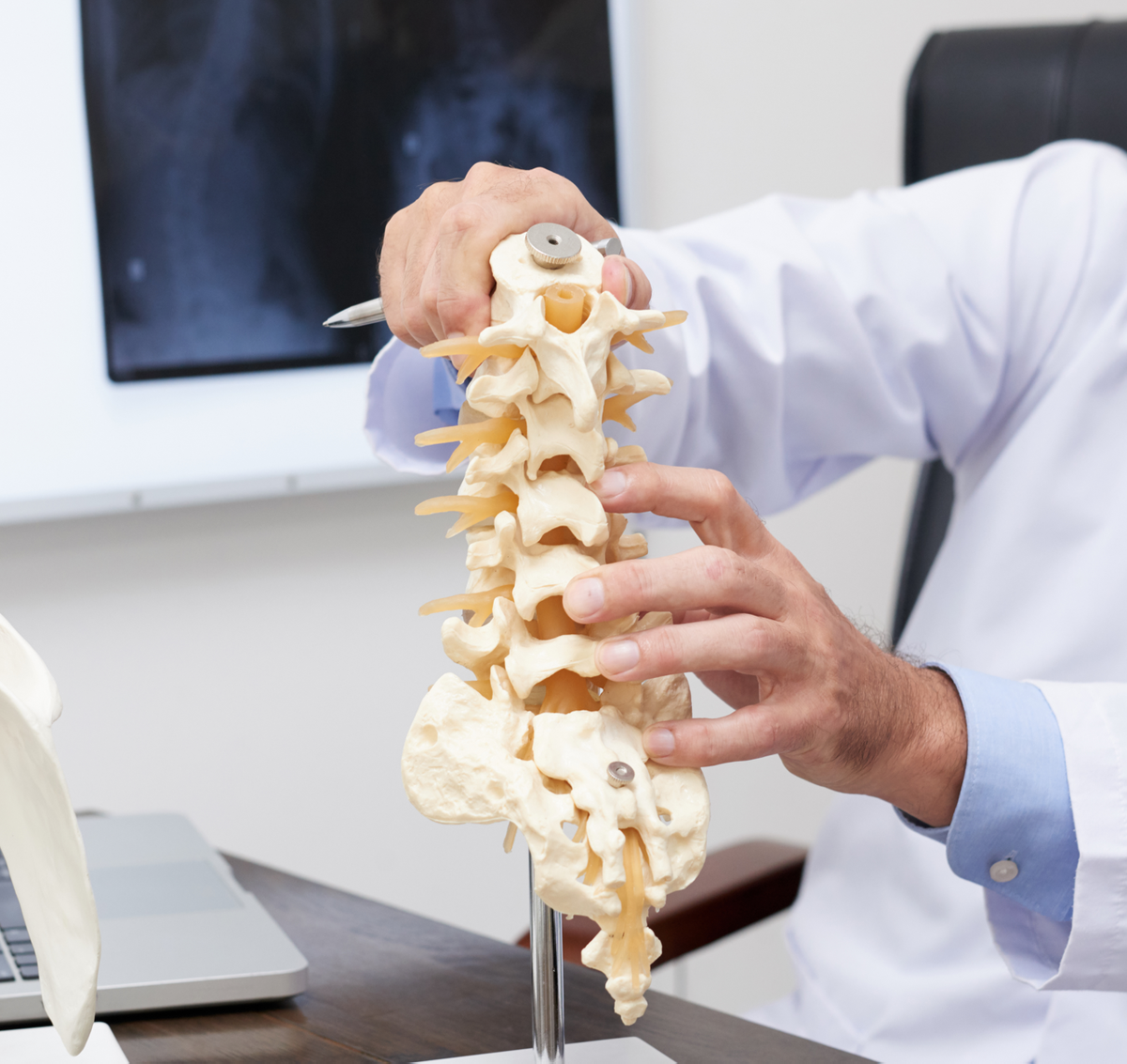
Spinal Evaluations and Conservative Care Discussions in Los Angeles
Orthopedic Spine Surgeon — Long Beach & Torrance, CA
Medically reviewed by Brandon A. Ortega, MD · Last updated July 31, 2026
A spinal evaluation identifies the likely cause of neck, back, arm, or leg symptoms and determines whether nonsurgical treatment is appropriate. Conservative care is not surgery and does not require a surgical recovery period. Depending on the condition, treatment may include activity changes, medication, physical therapy, home exercises, or carefully selected injections. Many uncomplicated episodes of back pain improve within several weeks, while chronic or nerve-related conditions may require longer treatment.
What Is Conservative Care?
Conservative care refers to nonsurgical treatments intended to reduce pain, improve mobility, strengthen the muscles supporting the spine, and help patients safely resume daily activities.
A treatment plan may include:
- Education and temporary activity modification
- Physical therapy
- Home stretching and strengthening exercises
- Posture and movement guidance
- Anti-inflammatory or pain medication
- Heat or ice
- Weight-management or lifestyle recommendations
- Epidural steroid, facet-joint, or nerve-root injections when appropriate
- Referral to pain management or physical medicine and rehabilitation
Treatment is individualized rather than based on an MRI finding alone. The evaluation considers the location and pattern of symptoms, neurological findings, general health, functional limitations, and whether diagnostic imaging corresponds with the patient’s complaints.
Conservative care does not necessarily correct structural changes such as arthritis, disc degeneration, or vertebral slippage. Its purpose is often to control symptoms and improve function without surgery.
Conditions Treated
Spinal evaluations and conservative treatment discussions may be appropriate for:
- Neck or lower-back pain
- Herniated or bulging discs
- Cervical or lumbar radiculopathy
- Sciatica
- Degenerative disc disease
- Cervical or lumbar spinal stenosis
- Spondylosis and spinal arthritis
- Muscle strains and soft-tissue injuries
- Mild or stable spondylolisthesis
- Sacroiliac joint pain
- Facet-joint pain
- Persistent symptoms following previous spine surgery
Many spinal conditions can initially be managed with physical therapy, medication, injections, and other nonsurgical measures. Surgery is generally reserved for symptoms that do not improve sufficiently or for conditions involving progressive neurological problems, significant instability, infection, trauma, or another urgent concern.
General Patient Criteria
Conservative care may be appropriate for patients who:
- Have mild to moderate neck or back symptoms
- Have not yet completed a structured nonsurgical treatment program
- Do not have progressive neurological loss or severe instability
- Want to understand both surgical and nonsurgical options
- Need evaluation after symptoms recur
- Have imaging abnormalities but uncertain symptom correlation
- Are not currently suitable candidates for surgery
- Prefer to postpone or avoid surgery when medically reasonable
Patients with symptoms such as progressive arm or leg weakness, loss of bladder or bowel control, numbness around the groin, fever with severe spinal pain, significant trauma, or rapidly worsening walking problems require prompt medical evaluation rather than routine conservative care alone.
What to Expect
The visit begins with a review of the patient’s symptoms, medical history, previous treatment, medications, occupation, activity level, and treatment goals.
The clinician may perform a physical and neurological examination that evaluates:
- Strength
- Sensation
- Reflexes
- Balance and walking
- Spinal movement
- Areas of tenderness
- Positions or movements that reproduce symptoms
Existing X-rays, MRI scans, or CT images may be reviewed. Additional imaging, electromyography, or bone-density testing may be recommended when the examination suggests that more information is needed.
After the evaluation, the clinician discusses the likely diagnosis and available options. The initial plan may combine physical therapy, home exercise, medication, activity guidance, or referral for an injection. Surgery may be discussed as a future option without being immediately recommended.
Follow-up is used to assess whether pain, mobility, strength, and function are improving. The treatment plan may be continued, adjusted, or expanded according to the response.
Recovery and Rehabilitation
Because conservative care does not involve an operation, there is usually no surgical recovery period. Patients are often encouraged to remain appropriately active rather than rely on prolonged bed rest.
Physical therapy may focus on:
- Improving flexibility
- Strengthening the back, abdominal, neck, or shoulder muscles
- Correcting movement mechanics
- Improving posture
- Increasing walking tolerance
- Developing a sustainable home-exercise program
Many uncomplicated episodes of back pain improve within a few weeks. Chronic pain, spinal stenosis, arthritis, and nerve-related symptoms may require a longer course of treatment and continued symptom management.
An injection may provide temporary relief that allows the patient to participate more comfortably in rehabilitation. However, injections do not permanently correct every cause of spinal pain, and their effectiveness and duration vary.
Potential Complications and Success Indicators
Conservative treatment generally avoids the risks associated with surgery, but individual treatments can still have side effects or limitations.
Potential concerns include:
- Medication-related stomach, kidney, liver, bleeding, or sedation risks
- Temporary pain or soreness after physical therapy
- Symptom aggravation from unsuitable exercises
- Temporary blood-sugar elevation after steroid treatment
- Bleeding, infection, headache, or nerve irritation following an injection
- Incomplete or temporary symptom relief
- Delayed recognition of a condition that requires surgery
Medication and injection risks depend on the treatment, dosage, medical history, and frequency of use. Patients should follow the prescribing clinician’s instructions and report worsening neurological symptoms.
Success indicators may include:
- Reduced neck, back, arm, or leg pain
- Improved strength and flexibility
- Increased walking or standing tolerance
- Improved sleep
- Greater ability to work and complete daily activities
- Reduced dependence on pain medication
- Consistent participation in exercise or rehabilitation
- Avoidance or postponement of surgery when medically appropriate
A successful conservative-care program does not always mean that every symptom disappears. Meaningful improvement in function, symptom control, and quality of life may represent a positive outcome.
Spinal Evaluations and Conservative Care Discussions in Los Angeles Q&A
Does seeing a spine surgeon mean surgery will be recommended?
No. Many spinal conditions are initially treated with physical therapy, medication, injections, and other nonsurgical measures. Surgery is generally discussed when testing identifies a surgically correctable problem and conservative care has not provided adequate improvement, or when urgent neurological or structural concerns are present.
How long should conservative treatment be attempted?
There is no single timeline for every condition. Some uncomplicated symptoms improve within several weeks, while conditions such as degenerative spondylolisthesis may be treated nonsurgically for several months before surgery is considered. Progressive weakness or other urgent neurological findings may require earlier intervention.
Are spinal injections considered conservative care?
Yes. Epidural, nerve-root, and facet-joint injections are nonsurgical treatments that may reduce inflammation or help identify a pain source. They are more invasive than medication or physical therapy but do not involve open surgery. Their benefit may be temporary, and they are not appropriate for every patient.
Why Choose BAO Spine?
Fellowship-trained expertise
Advanced, subspecialty training in complex and minimally invasive spine surgery.
Conservative care first
Most patients improve without surgery — treatment begins with the least invasive options.
Motion-preserving techniques
Cervical and lumbar disc replacement that protects your natural range of motion.
Two convenient locations
Personalized spine care in both Long Beach and Torrance, California.

About Dr. Ortega
Brandon A. Ortega, MD, is a fellowship-trained orthopedic spine surgeon providing comprehensive, personalized spinal care to adults in Long Beach and Torrance, California. His dedication to helping each patient regain mobility, reduce pain, and improve their quality of life has earned the respect of everyone in the community struggling with neck and back pain.
Consultation
Get expert care with spinal evaluations and conservative care discussions in Los Angeles
Request an appointment and Brandon A. Ortega, MD's team will reach out to schedule your visit — fellowship-trained, personalized spine care.
Prefer to call? Contact us.